
-
 কর্তৃক Admin
-
 Jun 11, 2026
-
 IELTS Writing Task 2
 -
 0 মন্তব্য
IELTS Problem-Solution Essay Structure: Causes First, Solutions Next
A problem-solution essay can look easy because the question already tells you what to discuss. But many IELTS candidates lose clarity because they mix every idea together. One sentence talks about a cause, the next sentence gives a solution, then the paragraph jumps back to another problem. A clear IELTS problem-solution essay structure keeps causes and solutions separate so the examiner can follow your argument.
This does not mean every essay must look exactly the same. You should always read the question carefully. But for many Task 2 questions asking about problems and solutions, a simple structure works well: introduction, one body paragraph for causes or problems, one body paragraph for solutions, and a short conclusion.
Read the question before choosing the paragraph plan
Some questions ask: “What are the causes of this problem and what solutions can you suggest?” Others ask: “What problems does this cause, and how can they be solved?” These are similar, but not identical. One question wants causes and solutions. Another wants effects or problems and solutions.
Before writing, underline the two tasks. If the question says causes, do not write only effects. If it says problems, explain the actual difficulties created by the situation. Then decide what each body paragraph will do.
For example, if the topic is youth unemployment, Body Paragraph 1 could explain causes such as weak job-market skills and limited practical training. Body Paragraph 2 could suggest solutions such as career-focused education, internships, or better training programmes. The reader should not feel that all ideas have been thrown into one box.
Keep Body 1 and Body 2 clearly separate
A strong paragraph has one main job. In a problem-solution essay, Body 1 can explain the problem side, and Body 2 can explain the solution side. This makes the essay easier to plan and easier to read.
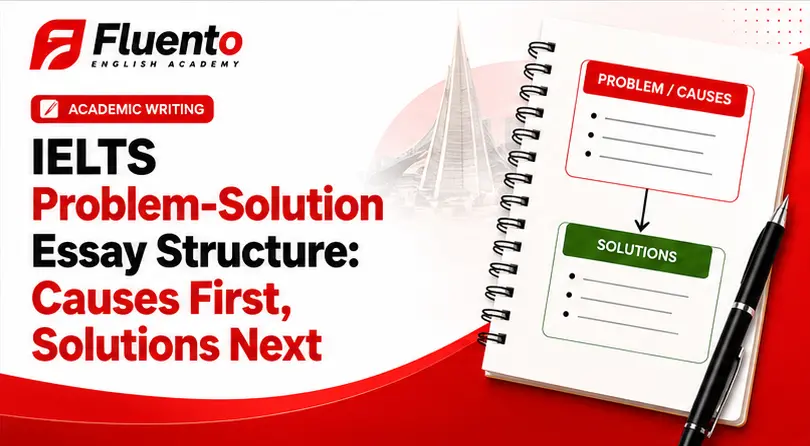
A simple plan may look like this:
- Introduction: paraphrase the issue and give a brief overview.
- Body 1: explain the main causes or problems.
- Body 2: explain practical solutions.
- Conclusion: summarise the main point.
The topic sentence of each body paragraph should make the job clear. For Body 1, you might write: “One major reason for youth unemployment is the gap between academic education and workplace skills.” For Body 2: “A practical way to reduce this problem is to connect education more closely with real employment needs.”
Notice how each paragraph has a direction. The first diagnoses the issue. The second responds to it.
Use linking words carefully, not mechanically
Many learners think linking words alone create coherence. They use “Firstly”, “Moreover”, “On the other hand”, and “In conclusion” even when the ideas are not logically connected. In IELTS Writing Task 2, coherence comes from idea control first. Linking words only help when the paragraph already makes sense.
For causes, you can use phrases like “One reason is…”, “This happens because…”, or “As a result…”. For solutions, use phrases like “One possible solution is…”, “This could be addressed by…”, or “The government and institutions can…”
Do not overuse memorised connectors. A clear sentence with a logical idea is better than a heavy sentence filled with academic linking phrases.
Practise with one topic at a time
To improve, take one problem-solution topic and make only the plan first. Write two causes or problems and two solutions. Then choose the strongest ideas before writing the essay. This prevents you from starting with a weak plan and getting stuck halfway.
You can use the Essay Writing Practice Tool to get random prompts and practise this structure under time pressure. Start by planning for five minutes before writing. After the essay, check whether each body paragraph did one clear job.
A good problem-solution essay does not need complicated ideas. It needs the right ideas in the right place. Causes first, solutions next is often the cleanest way to get there.
আমাদের নিউজলেটারে সাবস্ক্রাইব করুন
সরাসরি আপনার ইনবক্সে লেটেস্ট আপডেট, টিপস এবং তথ্য পান।


আরও পড়ুন
মন্তব্য করতে আপনাকে লগইন করতে হবে
সাম্প্রতিক পোস্ট


আপনাকে স্বাগতম
সাবস্ক্রাইব করুন আমাদের ভবিষ্যতের নিবন্ধগুলিতে!
সরাসরি আপনার ইনবক্সে লেটেস্ট ইংরেজি শেখার টিপস, এক্সক্লুসিভ কোর্স অফার এবং নতুন নিবন্ধের বিজ্ঞপ্তি পান।
মন্তব্য