
-
 কর্তৃক Admin
-
 May 13, 2026
-
 Fluento Website Tools & Services
 -
 0 মন্তব্য
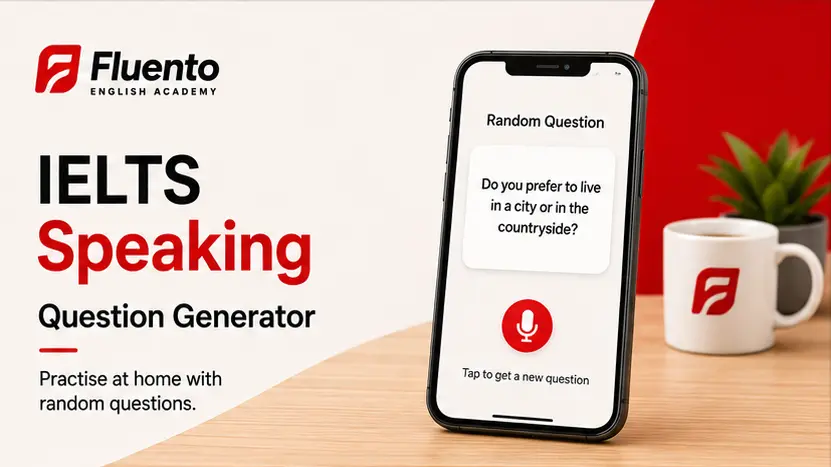
IELTS Speaking Question Generator: Practise at Home with Random Questions
You do not need to wait for a teacher every time you want to practise IELTS Speaking. Teacher feedback is valuable, but daily fluency grows from regular speaking practice. An IELTS Speaking question generator helps you get random questions quickly, so you can practise spontaneous answers instead of preparing only for topics you already like.
This is especially useful for learners who freeze when the topic is unfamiliar. Random practice trains you to think, organise, and speak at the same time.
Why random questions build real fluency
Many students practise Speaking by reading a list of common questions and writing perfect answers. The problem is that real speaking is not writing. You need to respond naturally, even when your grammar is not perfect. Random questions reduce over-preparation because you cannot fully predict what will appear next.
For example, one question may ask about your hometown. The next may ask about technology, food, transport, or a childhood memory. This variety helps you build flexible ideas. You learn how to start an answer, add a reason, give an example, and stop without sounding memorised.
Fluency does not mean speaking very fast. It means speaking with enough control to keep going.
A 10-minute home practice routine
Try this simple routine. Open the IELTS Speaking Question Generator. Choose one random question. Give yourself five seconds to think, then speak for thirty to forty-five seconds. Record your answer on your phone. Do not stop and restart every time you make a mistake.
After recording, listen once and choose only one thing to improve. Maybe your answer had no example. Maybe you repeated “actually” too many times. Maybe your verb tense changed without reason. Practise the same question again and fix that one issue.
This routine works because it is short. You can do it before class, after work, or at night. One question a day may not feel dramatic, but after a few weeks, you will have answered many topics aloud.
You can also rotate the focus. On one day, work on giving clearer examples. On another day, focus on reducing long pauses. Later, focus on pronunciation or grammar accuracy. This keeps practice manageable. If you try to fix everything in one answer, you may become nervous and stop speaking naturally.
When recording is not enough
Self-practice helps you build confidence, but it cannot always show you what is affecting your band. You may not notice pronunciation problems, grammar patterns, or weak answer development. That is where feedback becomes useful.
Use free random questions for daily practice. When you want a more serious check, record longer answers and compare them with IELTS Speaking expectations: direct answer, development, vocabulary control, grammar accuracy, and pronunciation clarity. If you need detailed correction, you can book a Paid Speaking Mock Evaluation and learn which habits to fix next.
The best speaking practice is not memorising twenty perfect answers. It is answering many real questions, noticing your mistakes, and improving one layer at a time. Start with Part 1 if you feel nervous. Then move to longer Part 2 answers and more thoughtful Part 3 explanations when your confidence grows. This gradual approach makes speaking practice less stressful and easier to repeat. Consistency matters more than one long practice session.
আমাদের নিউজলেটারে সাবস্ক্রাইব করুন
সরাসরি আপনার ইনবক্সে লেটেস্ট আপডেট, টিপস এবং তথ্য পান।


আরও পড়ুন
মন্তব্য করতে আপনাকে লগইন করতে হবে
সাম্প্রতিক পোস্ট


আপনাকে স্বাগতম
সাবস্ক্রাইব করুন আমাদের ভবিষ্যতের নিবন্ধগুলিতে!
সরাসরি আপনার ইনবক্সে লেটেস্ট ইংরেজি শেখার টিপস, এক্সক্লুসিভ কোর্স অফার এবং নতুন নিবন্ধের বিজ্ঞপ্তি পান।
মন্তব্য